Wednesday, 5 February 2014

Currency union matters as an option, formal or informal

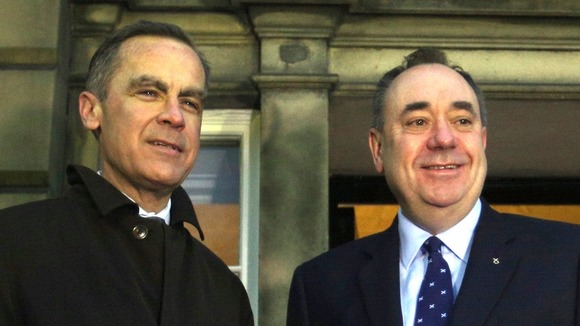
There are few people in a position of power at a UK level that those of us who advocate Scottish independence have much respect for. Yet the Governor of the Bank of England is one of those few. Amazingly Sir Mervyn King is reputed to have had a far better relationship with Alex Salmond than with Alistair Darling, a testament perhaps to just how badly Brown and Darling handled the economy. Salmond was involved in some discussions relating to currency union with King before Mark Carney took. In his role as governor Carney is not going to have the same agenda as a politician, he is simply there to do his job and being Canadian his opinion on whether or not Scotland should be independent is not going to be as strong. On the one hand he may feel Scotland is only seeking what most Canadians desired during the years of colonial Britain, on the other hand he may see echoes of the Quebecois referendum in Scotland's big decision. Either way his involvement in the current debate is reasonably neutral and respectable and is not holding back from providing answers out of any fear of 'pre-negotiations'. Alex Salmond and Mark Carney got on with the technical discussions and the latter presented his analysis a week ago.

Mark Carney and Alex Salmond

It is of no great surprise or worry that compromise has to be found in formalising a currency union. Yes, the UK government remains the main user of the Pound Sterling and the founding state of the Bank of England. But Scotland has a stake in the currency as well and most importantly it holds the cards on this issue. The UK government has indicated it may refuse a formal currency union but actually it is the UK government that will urgently feel the need for discussions with the other government for the formalisation of the common currency area.

Saturday, 4 January 2014

Why not all nationalists are Nationalists.

My first post in 2014, the year Scotland decides. What could I write about? Well maybe I could get everybody into the mood by stirring up a bit of nationalism. How about that? Of course I would be far better discussing the practical benefits of a Yes vote but maybe I should tackle this subject sooner rather than later.

There is nothing wrong with nationalism as such whether that's Scottish nationalism or British nationalism. But it's when it is used emphatically in political discourse that makes it a problem. We're entitled to our own emotions and our own desires for our country. But when you have to make the case for or against a political viewpoint it has to be done so with proper reasoning.

Scottish nationalists on the whole understand this which is why their focus on the Scottish independence debate is about creating a better and more empowered society. Some may express the sentiment "Scottish not British" but it is more a personal thing for them. British nationalists, that is to say those who support the union for emotional reasons (which it's fair to say isn't everyone who supports the union), have on the other hand often gone all-out in trying to put identity at the heart of the debate as though the only way to have any strong bond with your friends and family south of the border is to share a 'nation'.

Sunday, 29 December 2013

Just how should we remember World War I?

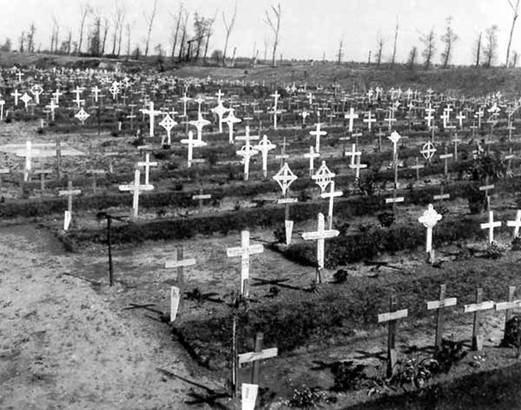
The village of Ousby in Cumbria sits upon the school bus route which I took many times when I was living in the Eden Valley near Penrith. What I was unaware of was that in times past Ousby was one of the luckiest communities in England. You won't find a War Memorial in the village for those who perished in the 1914-1918 conflict. You might think 'my goodness, what a scandal how can they not care about their war dead?!' But that's just it - there are no war dead. For Ousby is one of only 53 'Thankful villages' in all Britain, those parishes that lost no lives in the First World War. 53. And that's it. They're all in England and Wales with none in Scotland. Further more only 13 of these thankful villages (or parishes) lost no lives in the Second World War either and Ousby isn't among them.

It goes to show the very scale of the casualty list from World War One. Nearly a million people from the UK died as a result of the conflict, the vast majority being soldiers and this accounted for 2% of the population. And next year the outbreak of this disastrous event, which 'lost a generation', will be 100 years ago. We should mark the events of World War One but not use them as an excuse to celebrate.


Thursday, 31 October 2013

Jobcentre Plus needs to earn its Plus

Earlier this year I experienced a double irony. Barely a couple of hours after it was announced that Margaret Thatcher had died I went for a job interview. Nine days later I went for another job interview at the same time Thatcher's funeral was taking place. It would be another few weeks before I went for another interview this time with no significant coincidence. It's ironic of course that I went for job interviews on the two key moments at the end of Thatcher's life because of course it was dear old Maggie who made thousands unemployed during her eleven years as Prime Minister and now she had passed away here I was with two opportunities to return to employment. Regrettably I was unsuccessful at both so perhaps it was in fact ominous.

What today's generation of Tories are doing certainly doesn't help and now we have those who want jobs but can't get jobs being further penalised for being lazy. The Tories want to make those who can't find work go out and spend hours in crap jobs just to earn their benefits. We've probably all heard the recent and shocking case of Cait Reilly who was made to give up the more meaningful voluntary work she was already doing at a museum to work at Poundland stacking shelves - just to earn her Jobseeker's Allowance! It is truly patronising that the UK Government can descend to this level because many of us who want to work are all too eager to go and give our time and energy to volunteer for charities other organisations. We like going out and giving our services in those hours because the alternative is hardly pleasing - sitting at home feeling bored and useless.

Plus or minus?

Sunday, 27 October 2013

How should the so-called 'British Isles' be known?

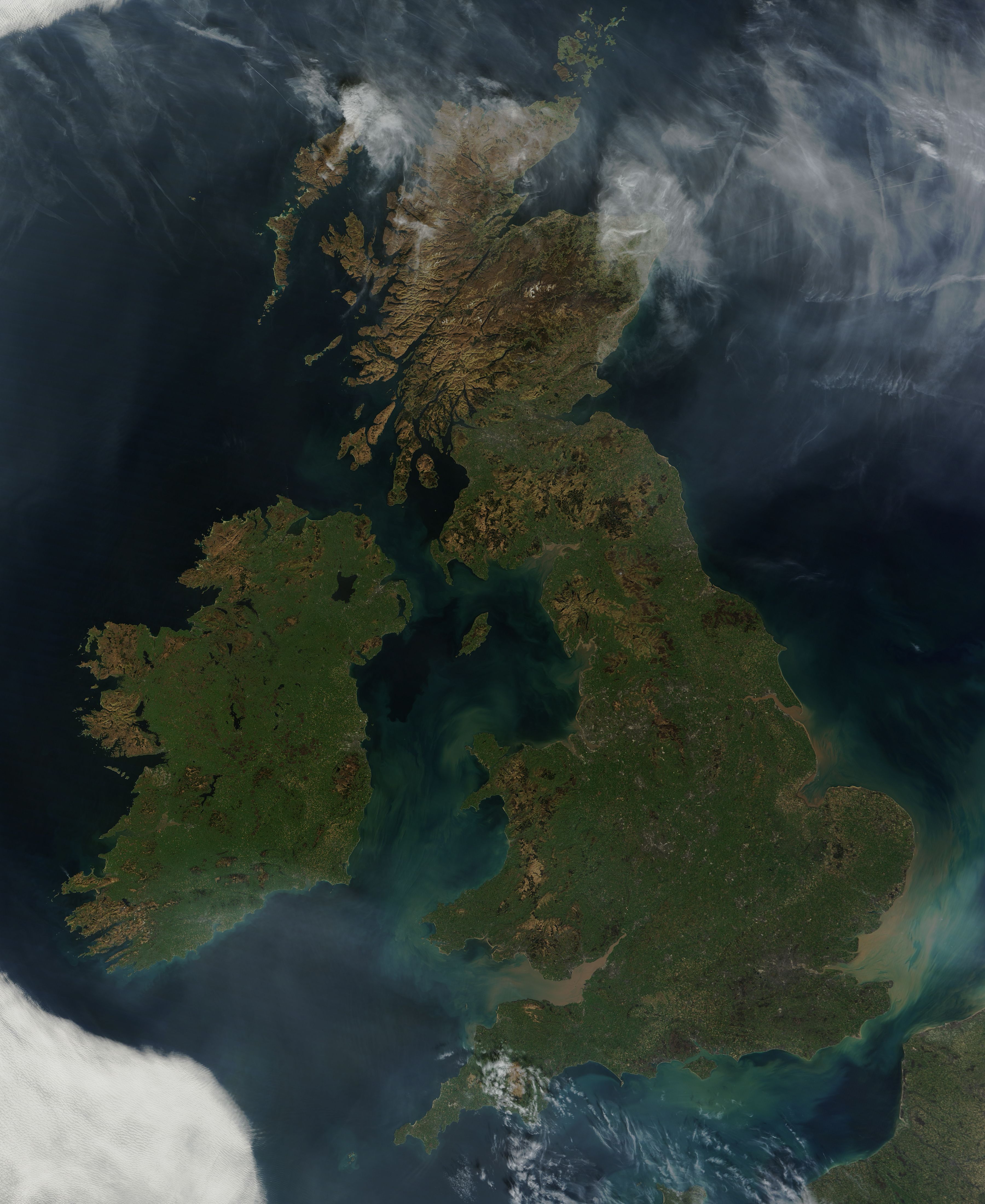
I will reveal exclusively here in this post two names I propose for the islands off the north-west coast of Europe commonly known as the British Isles. You may wonder why I'm suggesting alternative names when we already have a name we're all familiar with. But I feel the British Isles is the wrong name. Great Britain is the right name for the main island and British its appropriate adjective.


The British-Irish Isles
 

The British Isles is an unpopular name in the Republic of Ireland for the simple reason that the country is part of neither Great Britain nor the United Kingdom. So it is a wholly inappropriate name. An agreement should be found perhaps through the British-Irish Council on what would be a suitable alternative. For now I will just stick to the British-Irish Isles. But here are the two suggestions I'd like to put forward:

Friday, 11 October 2013

THE WALL OF SHAME

In the Scottish Independence debate we can all agree to disagree about what the best future is for Scotland and what it will deliver for each and every one of us. But there is no defending the indefensible. And when a unionist decides that simply because a pro-indy person doesn't share their view about the political union with England then the pro-indy person somehow dislikes the social union with England then clearly that unionist has an axe to grind. And the very lowest such a unionist has been known to sink is to refer to a supporter of Scottish independence as 'anti-English'. This attempt to turn a simple political disagreement into a deep psychological analysis about an opponent's motives has no place in a mature debate.

Many of us who are voting Yes in this referendum are English like myself. We're maybe a minority of the English voters but we still count. The idea that just because of my political views I am inherently anti-English is frankly insulting and anybody who suggests we are anti-English deserves to be named and shamed.

Therefore, I have compiled a list of unionists who have referred to the SNP or supporters of independence in general as anti-English, Anglophobic or racist or used similar defamatory terms to describe them. It will be updated every time somebody makes an offending comment.

So in no particular order, here is the Wall of Shame:

James MacMillan
Source: http://blogs.telegraph.co.uk/culture/jmacmillan/100059628/alex-salmond-is-exploiting-scotlands-reservoir-of-anti-englishness-dont-be-surprised-if-it-overflows/

Tom Harris
Source: http://wingsoverscotland.com/under-the-bridge/

George Foulkes
Source: http://www.scotsman.com/news/politics/top-stories/foulkes-snubs-mcleish-s-call-to-apologise-for-snp-racism-claim-1-917905

Brian Wilson
Source: http://www.scotsman.com/the-scotsman/opinion/comment/brian-wilson-snp-convert-to-olympic-supporters-1-2442676

Michael Kelly
Source: http://www.scotsman.com/the-scotsman/opinion/comment/michael-kelly-another-fine-mess-looming-over-horizon-1-2801225

David Maddox
Source: http://thesteamie.scotsman.com/viewpost.aspx?id=67

Steve James
Source: http://www.wsws.org/en/articles/2011/09/scot-s14.html


Nigel Farage
Source: http://www.bbc.co.uk/news/uk-scotland-22566180

Duncan Banatyne
Source: http://www.scotsman.com/news/celebrity/scottish-independence-duncan-bannatyne-backs-union-1-3081713

Duncan Stephen
Source: http://doctorvee.co.uk/2005/09/15/the-anti-scottish-snp/

Archbishop Cranmer
Source: http://archbishop-cranmer.blogspot.co.uk/2012/01/alex-salmonds-anglophobic-racism.html

Adzam Ruhul
Source: http://reality-insanity.blogspot.co.uk/2012/10/how-snp-uses-anglophobia-to-split-union.html

Donald Findlay QC
Source: http://www.boards.ie/vbulletin/showthread.php?t=2056286028

Susan Dalgety
Source: http://www.heraldscotland.com/civil-servant-who-made-snp-racist-jibe-quits-key-post-1.827705

John Redwood
Source: http://www.heraldscotland.com/politics/political-news/redwood-snp-anti-english.17045479

Jonathan Calder
Source: http://liberalengland.blogspot.co.uk/2008/07/snp-candidate-in-glasgow-east-is-anti.html

Malcolm Rifkind
Source: http://www.telegraph.co.uk/news/uknews/1328819/Rifkind-accuses-SNP-in-race-row.html

K the Unionist
Source: http://ktheunionist.blogspot.co.uk/2013/03/the-scottish-nationalists-are-anti.html

The Orange Torch
Source: http://www.britishtogether.co.uk/news2.php?action=viewArticle&articleId=1

John Major
Source: http://www.heraldscotland.com/news/home-news/john-major-scottish-nationalists-use-anti-english-sentiment-to-irritate-and-enrage.1385723008

Melanie Phillips
Source: http://m.youtube.com/watch?v=tO7YxtlTKRY

Kev Milne
Source: https://www.youtube.com/watch?v=af86HgDOs4Y

Tom Morton
Source: http://www.theguardian.com/commentisfree/2014/apr/22/scots-not-morally-superior-solidarity-south-of-Carlisle

Fiona Laird
Source: http://www.theguardian.com/commentisfree/2014/apr/29/british-scotland-independence-vote-union


For the sake of integrity this wall can only include people who have been explicit in their branding of supporters of independence as anti-English or such-like. People who have implied that to support independence is to be anti-English but haven't said so explicitly aren't included and it is with some regret. Douglas Alexander may be considered one of them having delivered no fewer than three or four speeches over the past year talking about anyone who supports independence as wanting to walk away from friends and family in the rest of the UK. You can read a selection his recent speeches, here, here, and here. Read them and decide for yourself if they constitute a smearing of supporters of independence as anti-English as I personally believe they do.

Some people who have in the past described pro-independence people as anti-English are forgiven, at least for the time-being, including Billy Connelly not because I like him as a comedian (he's an absolute legend of course!) but because he has recently chosen to keep himself out of the debate and not judge. Andrew Marr is exempt as he was referring to the existence of anti-Englishness in Scotland which I don't doubt is still a problem in some places though I would question his wisdom in juxtaposing it with mention of the origins of the SNP.

Comments are welcome and encouraged especially if you can find more people who share the attitude of the idiots listed above.

Monday, 7 October 2013

Identity politics has lost the plot

Just the other day I was in Edinburgh about to walk up Calton Hill  (not with the march but certainly in their footsteps) when I passed a Scotsman newsagents with a board that said something like "NEW POLL WORRY FOR NO CAMPAIGN". Oh goody I thought can't wait to read it! Then later that evening I went online to the Scotsman website to find the poll only to discover that it was the findings from the census two years ago and in particular the National Identity question. 63% said they were "Scottish only". Another 18% said they were "Scottish and British". There was a simple flaw to this analysis which is that it provided you with a blank space to write in and just because you don't write something down doesn't mean you don't use it to describe yourself. Even many of the people who fully intend to vote No next year and quite comfortably call themselves British on many occasions would have simply put down 'Scottish' on the form. The reason they didn't put down 'and British' is because, well, they've already said they're British. They've said they're British by saying they're Scottish, it's just they're being more specific. Given the census has to be filled in (for fear of a £1000 fine which would be better spent on a holiday in the Caribbean (or more specifically Barbados)) then it is as scientific as you'll get a poll to be. Unionists should take note, it's not a case of being Scottish and British - rather it's a case of being Scottish THUS British. And for many supporters of Scottish independence, like myself, it's simple geography. Being British is like being European but on a smaller scale. There's the eponymous political union but there's also the fundamental concept from which the union is named. I'd rather relate to the more permanent. Although I support the idea of the European Union that is not the reason I feel European. I'm European because I'm from the continent of Europe. Likewise I'm British because I come from the simple geographical concept of Britain, that is Great Britain. I call myself British but I do not feel it is a nationality, that's why I didn't put it down in the census. And if I wanted to put down 'British' and 'European' on the census why not go the whole hog and put down 'English', 'South British', 'British', 'North-West European', 'European' and 'Eurasian'?