Sunday, 20 November 2016

The monarchy can fund itself

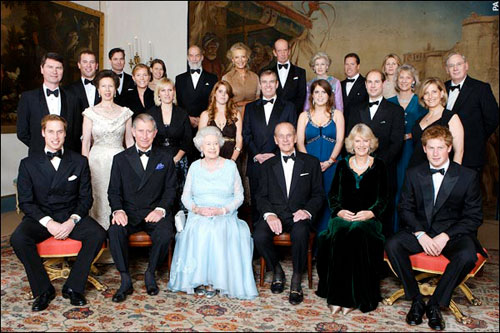
I have an admission to make: I don't really mind the monarchy. As far as I care the Queen can remain Head of State as long as we have the right political system for a fair and progressive society. It's perfectly possible to be such a country whilst retaining a royal family, think of Norway, Sweden, Denmark and the Netherlands, all with a King or Queen as head of state yet all considered among some of the most progressive countries in the developed world. Meanwhile we have France, Russia and America with executive presidents but these are not exactly the best of countries for liberal politics at the moment. Of course we also have Iceland and Finland as progressive republics. And then we have Spain and Britain with constitutional monarchies but political elites that leave a lot to be desired. So what can we really draw about a country based simply on what system it has for the head of state?


But whatever we think of the monarchy in this country, how it's funded is always going to be a source of controversy. The latest issue to emerge is that of the maintenance bill for Buckingham Palace, a whopping £370 million for the taxpayer. We can argue the exact technicality of the funding arrangement that will pay for this - the sovereign grant drawn from the crown estates - but it's still an issue. The crown estates should be full public property while the monarch's actual properties, Buck Palace, Balmoral, Windsor Castle and so on should all be paid for by something other than the public purse. There is little reason why the monarch and the rest of the Royal Family couldn't be privately funded. The Royal Family is known for being most popular among the wealthiest people in the country. If they are all keen to keep the monarchy and funding them by donations is the only option then they surely won't hesitate to do so. Buckingham Palace recieves around half a million visitors which isn't going to be enough to cover the costs of the bill but crowd-funding and not-for-profit heritage contributions ought to go some way.

What we ought to do is get politicians to back a bill that ends all public funding to the monarchy and its assets. We may only give them less than £1 a year per person or we may give them much much more. But we have to think about public perception here. When the Royal Family are rich enough, giving so much as an extra penny to them is not a savoury thought when there are many other families across the country in greater need. When there is legislation that specifically states public funding should not go to fund the monarchy, that's when public perception of the Royal Family on the side of its skeptics might begin to change. But even then that's not really going to make a difference to people's overall opinions.


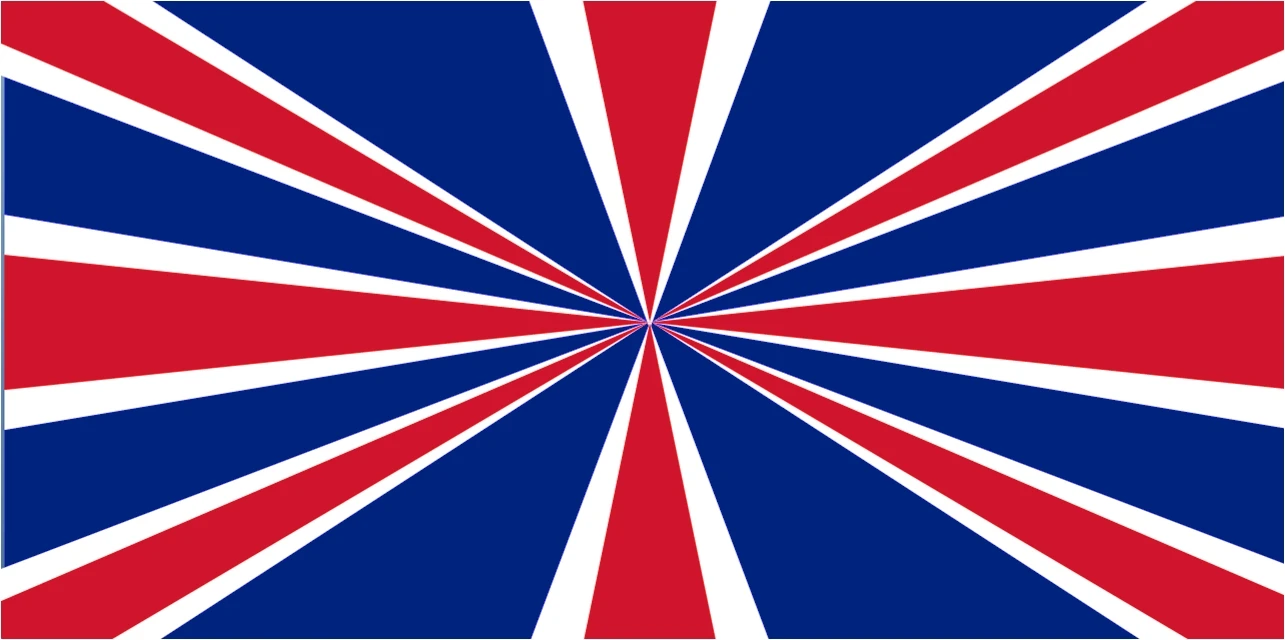
The thing is, the debate about the Monarchy, whether we should have it or not, is really less of a financial debate and more of a discussion concerning either how sentimental we are about the institution or how much it is a matter of democratic accountability. Because after all, an elected head of state still has to be paid for and that would generally be done by taxpayers. I'm not arguing for one moment that the monarchy makes any net contribution to the economy, that's more or less negligible. But if it is entirely self funding or funded by donation we could end contributing far more in public funding to the office of President of the United Republic (and wouldn't there also be a small cost involved in having to change the country's name?).

United Republic OKay? All I can say to the designer of that flag is U-ROK!

All the Royal Family needs is the support of wealthy donors, possibly the selling-off of its private assets to be enjoyed by the public in free museums, regular high-end jobs that as prominent public figures they're in a prime position to be offered or just the good old tapping into their bank accounts. If the reigning monarch is so enthusiastic about undertaking his or her role as head of state, a lack of salary isn't going to be a put-off - it's still going to feel like a privilege to be in that role.

Friday, 28 October 2016

I really don't do football tribalism

One weekend, about two months ago, there were two footballing derbies played out in two of the great  cities on this island. I've often had reason to compare Glasgow and Manchester with the civic grandeur of both their centres born out of a seismic 19th century industrial landscape that has become the cultural and economic heartland for many millions of people in the nation/region of which it is the biggest city. And likewise both have inevitably come to each have two big teams playing in some of Britain great cathedrals of football. Yet there is still something of a difference between the Manchester Derby and Old Firm derbies in the reputation of each rivalry.

I do not support either Celtic or Rangers though I may make an exception when it comes to the big European competitions in which case it becomes a matter of Scottish national interest whoever gets there. But I generally prefer to stay out of it and away from the politics of committing myself to an Old Firm club. Yes, I do have more of an affinity with the traditional fanbase of Celtic whose general political leanings are to the left - anti-establishment, anti-imperialism, socialist ideals, Irish reunification, Palestinian solidarity etc. The broad-left is where my political home lies but it does not give me any reason to support Celtic. Because when you have a footballing rivalry as big and divisive as that I want no part of it. The team I support is Liverpool while here in Scotland my allegiances lie more with local teams in the South-west - Queen of the South and Stranraer, both of whom could bring something of a boost to their clubs and local communities if they advance further in the leagues. In the Premiership, if there's any team I want to win it then it will be anyone but the Old Firm. So my support goes to whichever club can end the dominance of Rangers or Celtic. Last season that was Aberdeen who sadly missed out on beating Celtic to the top-spot, this season so far its looking like Hearts might be the contender. But I'm just sick to death of Glasgow's dominance in the top tier of Scottish football, unless Partick Thistle were to come along and steal the Old Firm's thunder.

More of this would be nice

Of course Celtic and Rangers have been good business for Scotland to an extent though the cost of policing them makes for a heavy bill. As football clubs they have their fair share of fans who are there just because they love football and have found their place in the family of one club or another. For them and many Celtic and Rangers fans across Scotland it isn't about sectarianism or ideology. They just support the clubs for similar reasons to why other people support other clubs be it a local connection, a family connection or maybe even a classroom influence among peers. Sadly however, at the heart of Scottish football lies this most tribalistic of rivalries. How about considering other rivalries for a change? Like one between Celtic and Hearts to echo the less acrimonious rivalry between Glasgow and Edinburgh, though that would probably just end up like another sectarian derby. It seems there's actually one between Rangers and Aberdeen that started relatively recently in a single match. But how about people just put aside their religious or political bias in finding their club of affinitiy? The thing with the rivalry between Celtic and Rangers is that the bigotry really cuts both ways. In the showdown between the two at Parkhead in September, a number of Rangers fans went and trashed the toilets while someone in the Celtic camp had the wise idea (n.b. irony) of hanging a pair of dolls possibly to symbolise what they saw as a club who died in 2012. We can call all this banter but it's really hard to know what to make of it. Certainly such behaviour can be highly provocative.

Sunday, 12 June 2016

Europe: More control when you're in the room than knocking on the window

We are now in the middle of the month when we are talking about little else but Europe, whether that's the football or something more important, a certain referendum that is less than a fortnight away. As someone on the left and a supporter of Scottish independence, the European Union ought to be the sort of thing I despised as a bureaucratic corporate centralising force with its  unelected headquarters in Brussels. Yet the main advocacy of Britain's exit from this club, a 'Brexit', is coming from the right and perhaps feels too jingoistic for comfort.


Twenty months on from the independence referendum it's easy to see the parallels emerging. The Brexit side saying "we are strong enough not to need dictating to by a foreign power" while accusing the other side of "Project Fear". But for me this is quite a different referendum needing quite a different debate. I personally favour remaining in the European Union and so it feels weird to find myself on the same side of the debate as David Cameron and George Osborne. Nonetheless we will be singing from completely different hymn sheets. The British Unionists are still having a dig at Alex Salmond even when they both agree on continued EU membership because we are contemplating another referendum especially if Britain as a whole votes to leave the European Union. We even have the cheek of Willie Rennie suggesting Alex Salmond should leave the Remain campaign because "he's an embarrassment". Talk for yourself mate! Not only that he thinks we "nationalists" will be voting to leave to ensure Britain gets taken out of the European Union so it would create the grounds for that second referendum. Well anybody with half a brain would realise how stupid that would be when the whole point with arguing for a second referendum in the event of a Brexit is because there is a strong Scottish vote for remaining in. So on that basis what we in Scotland should be campaigning for is a very strong vote north of the border (and in the short time we have before the referendum it is best for most politicians and campaigners to focus on one part of the UK when campaigning, whether Scotland, Wales, Wessex or Yorkshire) and let the rest of Britain decide for itself. The simple truth is that polls suggest there's going to be a strong vote to leave south of the border while in Scotland it will be quite the reverse. But Nicola Sturgeon is expressing strong support for a vote to remain in the EU not just within Scotland but across the UK. I certainly don't want the future for a Great Britain of three independent countries to include an England that is detached from the European Union while all its Celtic neighbours are committed members. But if it comes to the rump of the UK choosing to stay out of the EU then I would want an independent Scotland as soon as possible in order to bring the European Union back to at least part of our island.

Saturday, 30 April 2016

A RISE vote is an unwise vote

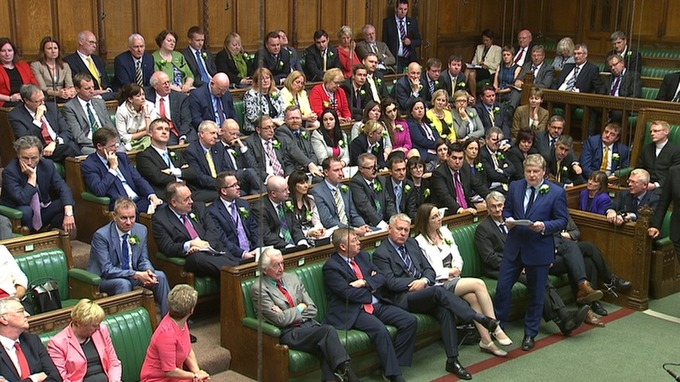
It's nearly that time of year again. Hard to believe almost 12 months have passed since that historic day when the SNP achieved a near clean-sweep of Westminster's 59 Scottish seats. A day that saw a number of familiar faces from the Yes campaign, some having only joined the SNP since the referendum, gain their spot on the (in)famous green benches. One of those was of course particularly remarkable - a 20-year old politics undergraduate called Mhairi Black unseating Douglas Alexander one of New Labour's stalwarts who had been there since the girl who would become the youngest MP for some three hundred years was still in nursery. I think I felt my age when I remembered back then in 1997 I was revising for exams that I would be sitting at the grammar school in Penrith!

It was easy to feel some gleeful schadenfreude with the enormity of Labour's collapse in Scotland - served them right for how they behaved towards us during the referendum! Yet that feeling soon gave in to a sense that actually Labour were finally eating humble pie and realising what was wrong with themselves. They weren't the great victors of the independence referendum that John McTiernan had so pompously predicted a few months before but rather the lambs that had sacrificed themselves to protect the union by a swing margin of just 5%. They sound like a shadow of their former self but the tone of humility they seemed to adopt wasn't going to make me forgive them anytime soon. They were well and truly tarnished by standing shoulder to shoulder with the Tories in 'Better Together'.

One set of seat predictions for May 5th

Now the time comes for their painful reminder. Whilst last year we could take nothing for granted in the pro-indy camp where most of us were united behind the need to vote SNP, the result this time is pretty much in the bag. The SNP will win the Scottish Parliament elections this coming Thursday and most likely they will increase their majority. But alongside this already-won contest for first place there are another two battles in play. The Tories fancy their chances to be the main opposition party ahead of Labour (I'd hardly be looking forward to that!) and the Greens sense a real opportunity to make a bigger impact on the back of their own increased membership since the referendum with the possibility of winning a few more seats and replacing the Liberal Democrats as the fourth party in Holyrood.

Friday, 8 April 2016

A guaranteed basic income - surely its time has come

Writing in the Guardian back in February last year on the subject of work-life balance Channel 4 correspondent Paul Mason wrote about the possibility of a guaranteed basic income of £6,000 and how this could benefit many working class people. I only came across this article the other day and so thinking that it had only just been written I wondered why he wasn't mentioning Finland taking up this initiative in recent weeks but that was of course before I realised it was written way back three months before the UK General Election when there was still some hope Labour would be the party in government.


8 million gold coins dropped in a Swiss square to celebrate the successful petitioning for a referendum on BI.

The idea of a guaranteed basic income where you are unconditionally handed a government sum of, say, £6,000 a year for basically doing nothing is of course a wonderful thought just by the mere thought of it. What's not to like about that? But naturally anyone hearing this proposition for the first time would be quick to ask the serious questions about how exactly this would work, how much would it cost, what would be the economic effect of it on the country and so on. I myself went through this idea and its associated questions carefully in my mind before becoming convinced that I was onto something.

Saturday, 26 September 2015

When should we have another referendum.

2021. At the earliest.

Didn't think I'd answer it so quickly did you? Or directly? The referendum was of course now just a year ago and is still pretty recent. Not that there hasn't been a great deal of change since then of course we can now enjoy a strong SNP presence in Westminster, higher approval ratings of the party with a leader that even Alex Salmond must secretly envy in terms of popularity and now the gap between Yes and No is starting to narrow according to opinion polls. But should we really rush the second referendum?

I think we have to be patient and I believe Nicola Sturgeon will be able to work out when the time is right to include it on a manifesto. I have made this very comment recently on Facebook feeling that although I very much look forward to the day we win the campaign for Scotland to stand on its own two feet, the case for independence will need a bit more time to be won. And it appears someone picked up on my comment because soon an article appeared in Bella Caledonia reading:

"Such ideas will naturally draw critical responses and these are welcome, but too often in recent months a tiny but vocal minority have sought to silence any criticism of the SNP and its strategy, by telling many of us to ‘be patient’ and put our faith in leaders who ‘know what they’re doing’. This is a curious development considering that throughout the referendum we were actively encouraging people to think critically about power and leadership. In fact, those who were very active during the Yes campaign will readily tell you that the best strategies were not devised by ‘experts’ in Hope Street but by activists in the housing schemes and high streets across Scotland. I can think of no greater deterrent against independence than the prospect of a country where criticising politicians is frowned upon or worse, regarded as disloyal. "

I'll put my hands up and admit my guilt in response to this. I don't want to be mean to the author of this, he is of course one of many making a valuable contribution to the whole independence movement and I only wish five million people in Scotland shared his view! But unfortunately at the present moment just over two million people don't share his view and that is very unlikely to change significantly any time within the next couple of years. Which is why there is no point in staging another referendum so soon if we're unlikely to win it.

Let me set the record straight here. I am a member of the SNP not because I see it as the sole vehicle in the Yes movement but because that is what I feel is my natural political home. I am not quite as radical as others, the SNP fits with my more moderate pro-independence views. But I don't just have a follow-the-leader attitude and there is much I question in the SNP's leadership. I'm really glad I was in the SNP in 2012 when the Conference debated NATO, I was one of the delegates that voted against. Now that 100,000 new members have joined from the Yes campaign there is a much greater chance of policy being influenced in a radical direction not simply in terms of what will appeal to hardened unionists. I'm also growing to be increasingly sceptical of value of a single police force and now have my doubts about whether or not it should have been one single force or instead four large forces.

Of course I shouldn't have inferred that everyone on the Yes side, if that's what came across, is an SNP supporter or that Nicola Sturgeon was a leader for everyone in the Yes movement. And yes, it is activists who should be determining the direction of movement for the Yes side. But does my own voice count in all this? If I believed we could win the referendum convincingly were it to be held next year then I would demand it be held then. But what is the point in holding another referendum if we are unlikely to win? Truth is I trust Nicola Sturgeon to decide the suitable timing of the second referendum because it will fall to her to decide whether it is included in the SNP's next term and I know she's a cautious politician, she won't be perfect but I believe she is as canny an operator as Alex Salmond. Contrary to how it sounded my comment to 'be patient' is not submissive, it was, believe it or not, meant to be a statement of confidence. Confidence that the case for independence will only grow with time, give it a few years and we will have a consistent majority in the polls. Is the hunter lion in the Savannah crouching, hiding in wait for some time really timid just because he's not going straight in for the kill? No. He is waiting for the right moment to strike, if he is too hasty, the prey may be in a position to run away before the lion can catch him. If he waits too long the prey will also end up beyond reach. That is all I mean when I advise we take our time over the staging of a second referendum. If we hold it too soon, opinion won't have shifted much in our favour. But yes, hold it too late and our opportunity will pass.

Spontaneous grass-roots activisim is important of course. But good strategy is crucial. I don't think a second referendum should be in the 2016 manifesto because it will only play into the Unionists hands and we won't win, that is me being realistic not pessimistic. The SNP keeping the referendum off the table for a few years will tranquilise the opponents in their anti-independence tirades. Either that or we will expose their hypocrisy if they bang on about an independence referendum that isn't even part of five-year term having had the audacity to tell us to 'move-on'. Including the referendum on the 2021 manifesto will be a great idea. In the weeks after the 2014 referendum one of my work colleagues reiterated his opposition to independence being quite passionately 'British' (as if being British is somehow dependent on being part of the UK) yet was surprisingly quite generous in terms of the timing of a second referendum saying it should not be held for another ten years (others would say fifteen). So here's where it gets interesting. If every unionist was like my colleague then the inclusion of a referendum on the 2021 manifesto would really test their convictions. Would they want the referendum held straight away like they did in 2011? Or would they want it to wait three and a half years like last time so they could have their wish fulfilled that another referendum is only held after ten years. We could alternatively test unionist opinion on the timing of a second referendum to the max by pledging it in the 2026 manifesto instead, that way 15 years will have passed if again we wait three and a half years. But 2026 is way too far in the future, so the second referendum should be pledged on the 2021 manifesto and held within a few months hence. By holding it reasonably soon after the election anyone complaining about a long period of uncertainty can be reminded of the referendum's short timetable.

My advice that we should wait six years or so for the next referendum is not me telling people to cease in their general everyday activism until that time. Quite the contrary. All the good work done by activists should carry on as normal in all the years leading up to the next referendum, gaining more and more people's trust in our cause. The media won't pay much attention to it but that will largely be a good thing as the grassroots campaign can operate under the radar and not be so subject to the hostile media. With opinion polls shifting in our favour the unionist parties will have to address the inevitable sooner or later or they risk losing support. They will have to face up to the fact that accussing us of being 'nothing but vile cybernats' will serve no good whatsoever. The unionist media, especially the likes of the Daily Record, will also have to change their tune as they watch sale figures plummet. We don't ask of the mainstream media to take our side, we just ask them to be balanced.

I'm sorry if people thought my 'be patient' view was a call to lay off from campaigning, it wasn't. But my warning is clear. Whenever you hold the next referendum the likelihood is that will be it not just another six years but for a lot more than ten years. Can we wait another twenty years for the referendum that will win a Yes vote? Certainly not. Can we wait six years? Yes we can! Six years is exactly what we need to shift public opinion. So please please please folks, do not mistake my advice for partisan loyalty. I want to win the next referendum no less than you do. But we cannot afford to get the timing wrong.

Monday, 7 September 2015

Who else but Jez?

It has fast become 2015's answer to last year's Independence Referendum in terms of the 'Big Vote'. But only because of one man, Jeremy Corbyn. For too long Labour has taken the centre ground in order to win elections and in 13 of the last 18 years has been in power as New Labour, the party of big business. Granted Labour under Blair and Brown was never as callous as the current Conservative government in the way it has treated benefit claimants and Blair had his diplomatic honeymoon period in the late 90s when he oversaw the Good Friday Agreement and the birth of devolution (though that was in a large part thanks to the late Donald Dewar). But the overall direction of Labour has not been positive, sacrificing principles only to end up rejected at the ballot box by the millionaire bankrolled Tories.


At last we see someone from the left of Labour willing to challenge Labour's establishment and relieve Keir Hardie from a nauseating spin in his grave. Jeremy Corbyn is the lone baby boomer among the candidates in the Labour Leadership race the other three being from Generation X. They are all old enough to remember how horrible Margaret Thatcher was but only Jeremy is just old enough to remember the coronation and rationing. He may not have youth on his side but he has all the right ideas for running an opposition force in British politics. He wants an end to austerity. He wants to ditch Trident so the money can be better spent on frontline services like the NHS and schools. He wants to renationalise the rail network so money isn't being channelled by the greed of private franchises and large profits get spent instead on improving the service. He wants a more compassionate benefits system and an end to the bedroom tax.  And he wants to seek peaceful conflict resolution and an end to Britain's involvement in unjust and illegal wars.

But these things just scratch the surface of what Jeremy Corbyn promises as leader. What he will do is seismic for the Labour Party, it will mean a wholesale shift in how the party tackles the malice of the Tories. Opponents will talk about the 1970s, a decade when I wasn't born and even my big sister is unlikely to remember (though if she has memories of being an only child she will!). Those on Labour's centre, the Blairites as we call them, constantly warn of being 'locked out of power for a generation'. But how can they be so sure? And should the party really be seeking to win power at the cost of principles? Surely the whole point of a political party is to seek to influence the political landscape in favour of its grassroots membership not be part of its elite. Should we be worried about another Tory victory? Yes we should but we shouldn't just replace the great whites with hammerheads. It is clear the grassroots of the party are more and more in favour of Jeremy Corbyn and so this is what a real Labour Party should stand for, the ordinary members, a lot of whom will come from poor and working class backgrounds.

So if another group in the Labour Party, chiefly the career politicians who have for too long dominated the party, want to try and win power at whatever cost I suggest they do so in their own space. Perhaps they should set up their own political party or maybe join forces with the Liberal Democrats who have shifted further into the centre in the last five years. If that really is the way power will be won good luck to them. But most likely they will need a coalition or power sharing agreement with Jeremy Corbyn's party next time and then they will have to make concessions to the left. Labour were left with just their most working class constituencies in May but only a few more constituencies won would have prevented a Tory majority though there might still have been a pact with UKIP and the Unionist parties in Northern Ireland. Notwithstanding the support of kippers and Belfast bedfellows Mr Cameron would have struggled against an opposition of left or would-be left parties. In the case of the 'would-bes' all we need is the genuine left-leaning politicians to be representing them on the green benches.

And what about the Scottish dimension. Well Jeremy is no fan of independence I understand that. He is opposed to a second referendum anytime soon and even to the transfer of certain new powers to the Scottish parliament. But that hardly makes him a red tory when his heart is in the right place on so many other social issues. And perhaps his opposition to independence is much more in touch with the solidarity argument that the actual red tories kept cynically throwing around during the run-up to last year's referendum. For Scottish Independence would rob parliament of Corbyn's greatest ally - the SNP. If the contribution Angus Robertson's team makes to Westminster 's progressive anti-austerity lobby is the reason Jeremy Corbyn doesn't want Scotland to leave the UK then we ought to treat that as a compliment unlike those who campaigned against independence but with a hatred of the SNP.


Don't get me wrong, I still want independence for Scotland and another referendum before long so it I am somewhat disappointed with Corbyn's indifference to the cause. And we really don't need Labour up here in Scotland anymore when there is a strong alternative. But who else among Labour's leadership hopefuls is going to help England in its own journey towards better social democracy than Jeremy Corbyn? Just about everyone among the radical left down south of the border is looking at him with great hope. This is the man who, if he is successful less than a week from now, will challenge the very foundations of the establishment and will remind his party of their own founding values. But his message should also be this: No fakes. If you're truly with the party on our values you can stay, otherwise please leave.

Then the party that calls itself Labour will once again be the party that Kier Hardie, who lived until almost one century ago, dreamed of. It's not likely to be an easy ride for Corbyn if he's elected but one thing's for sure, he has inspired a new generation of political activists who will be standing firm behind him to help ensure he lives up to expectations.


Keir Hardie